
How Much Does It Cost to Have a Website Built? An Honest Breakdown
How much does a website cost? Real price ranges from website builders to custom development — and an honest guide to which option suits your business.
 // featured
Every business owner asks this question. And "it depends" is technically correct but practically useless. The truth is that the price range between a Wix site and a professionally built website can easily span a factor of 50. This article gives you real price ranges, explains what drives them, and helps you find the option that actually fits your situation.
The four routes to a website and what each actually costs
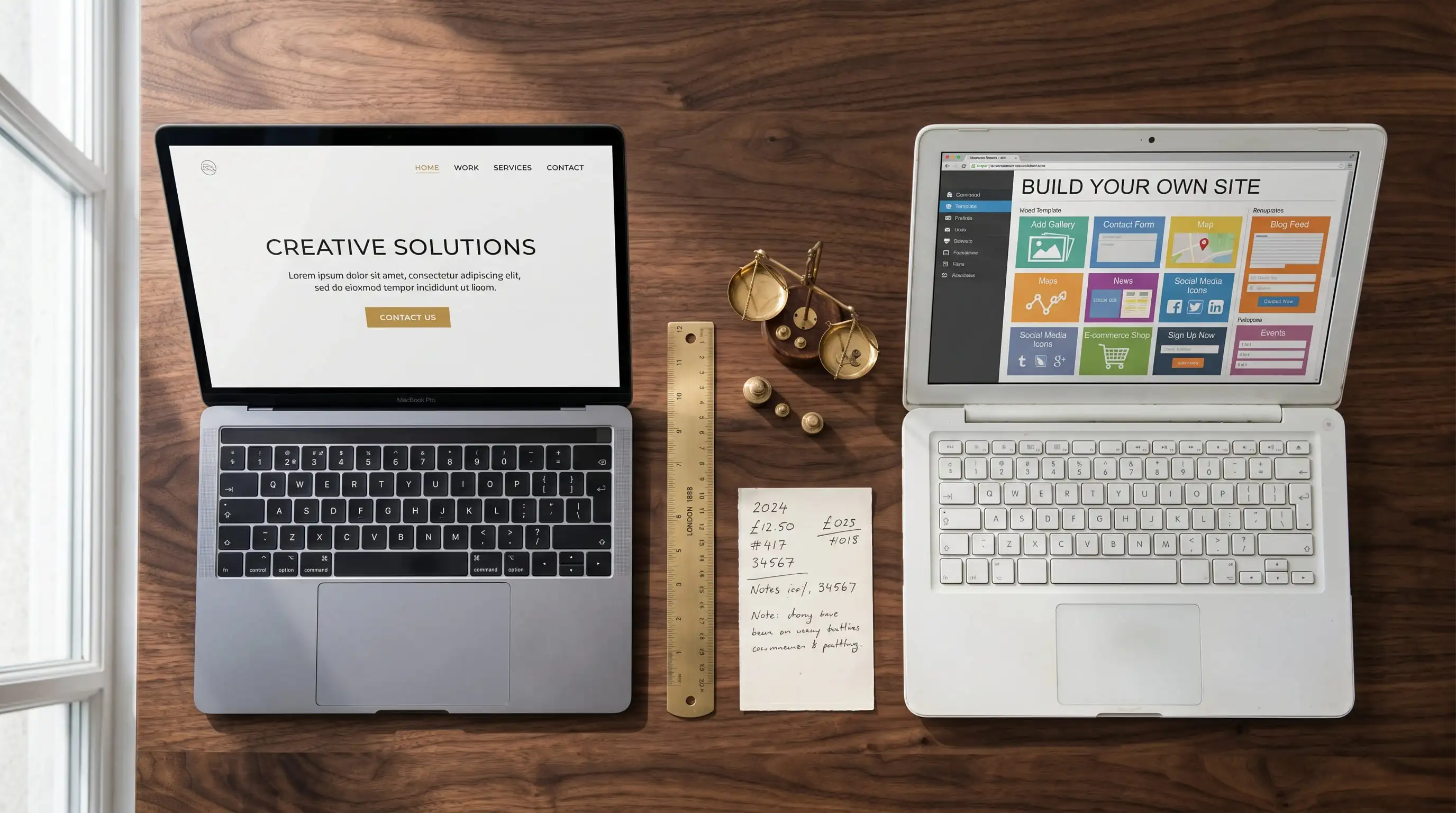 Comparison: website builder vs. professional custom website
There are essentially four ways to get a professional online presence. They differ not just in price, but in what you actually end up with and what options you keep open for the future.
| Option | One-off cost | Ongoing cost | Your time investment | Best for |
|---|---|---|---|---|
| Website builder (Wix, Squarespace) | £0–400 | £12–45/month | High (DIY) | Hobby projects, basic online presence |
| WordPress template agency | £1,200–4,500 | £45–130/month | Medium | Small businesses without SEO goals |
| Custom WordPress agency | £3,500–10,000 | £90–220/month | Low | Businesses with an in-house content team |
| Custom-built website | £4,500–18,000 | £70–180/month | Low | Businesses using SEO as a growth channel |
These are realistic reference figures. There is no upper limit, but there is a floor: pay significantly less than the bottom of any category and you will get significantly less than what that category delivers.
What drives the price of a professional website
No reputable agency pulls a number out of thin air. Every quote reflects specific cost factors:
Number of pages. A homepage plus five service pages is a fundamentally different project from a 30-page site with location landing pages and an active blog. Page count is the single biggest price driver, because every page means its own content, structure, SEO work, and design. A rough guide: three to five pages is a small project, ten to fifteen is medium, anything beyond that is a larger engagement.
Custom features. Booking systems, interactive pricing calculators, multilingual content, client portals, database integrations: each feature means development time. A contact form takes a day. A booking system with calendar integration takes one to two weeks. Something like a custom product configurator or AI chatbot can take several weeks.
Copywriting. Professional website copy that actually drives enquiries rarely comes from the client. Delegating this to the agency costs more upfront and, in most cases, delivers a better return. Copy is the invisible lever of a website: design makes the first impression, but the words decide whether someone picks up the phone.
SEO setup. A technically clean foundation means structured data, correct meta tags, logical URL architecture, internal linking, and per-page performance optimisation. This is not an optional extra. It is the minimum required for Google to properly index your site and show it in search results. Many cheaper builds skip this entirely, with consequences that only become visible months later in rankings.
Design complexity. A site built on an adapted template costs less than a fully original design. The latter means custom illustrations, bespoke animations, a complete design system. It costs more, but it can also be the difference between a website that looks like hundreds of others and one that people actually remember.
Hosting and ongoing maintenance. Some agencies bundle these into a monthly retainer; others invoice them separately. Always ask explicitly what is included: security updates, backups, content changes, response time for technical issues. What is written in the fine print here often determines what surprises are waiting for you after launch.
Why cheap often ends up expensive
The instinct to save on the biggest line item is understandable. For websites, it is usually a mistake.
Website builders like Wix or Squarespace feel affordable at first. Long-term, hidden costs accumulate: you are locked into the platform and lose everything if you ever want to leave. Load times are structurally worse than on a cleanly built site, which directly affects Google rankings. SEO control is limited because critical settings like URL structure, meta tags, and structured data can only be partially configured. And the larger your business grows, the faster you hit the limits the platform imposes on you.
The real cost question is not: what does the website cost? It is: what does it cost when the website generates no enquiries?
Work the numbers concretely. If you lose three qualified enquiries per month because your site loads slowly, breaks on mobile, or sits buried on page three of Google results, and each enquiry has an average margin of £600, your "affordable" solution is costing you over £21,000 per year in lost revenue. Against that, a professionally built website is a straightforward investment with a measurable return.
What every professional website must include
Regardless of price point, every website should meet these standards before it actively tries to attract customers:
A clear offer above the fold. The first screen must answer three questions within five seconds: What do you offer? For whom? And why should someone enquire with you specifically? Generic phrases like "quality", "expertise", and "customer satisfaction" answer none of these. Concretely: "Property websites for estate agents in the UK that generate enquiries through Google" is better than "Professional web design solutions for discerning clients."
Contact within one click. Every page on your site should have a visible path to get in touch, whether that is a phone number, a button to a form, or a WhatsApp link. Anyone who needs three clicks to reach you will not bother. This sounds obvious, but it is absent from a surprising number of professional-looking sites.
Mobile-first design. More than 60% of all searches happen on smartphones. A site that looks good on desktop but loads slowly or breaks on mobile loses the majority of its potential customers before they have read a single sentence. Mobile-first does not mean "looks acceptable on a small screen." It means the site was designed for small screens first.
Load time under two seconds. Google measures load time as a ranking signal. Users process it unconsciously: studies show that more than half of visitors leave if a page takes over three seconds to load. A professionally built site with clean code, optimised images, and good hosting reaches two seconds without much effort. A Wix site with twenty installed apps and uncompressed images rarely does.
SSL and legal compliance. A site without HTTPS is flagged as insecure by modern browsers, which erodes trust before a single word is read. A proper privacy policy, cookie consent setup, and legal notice are legal requirements in most jurisdictions, not optional extras.
Questions to ask an agency before you sign
These questions separate good proposals from bad ones before you commit:
Who writes the copy? If "the client provides the text" is treated as a given, expect the project to stall. Good agencies either offer copywriting as part of the project or clearly specify what they need from you and when.
What is included in the monthly cost? CMS updates? Security backups? Small content changes? A defined hours allowance? Get this in writing, not just in conversation.
Can you show me a site that is still fast and low-maintenance after three years? Any agency can show you freshly launched sites. A good one can show you how those sites hold up years later.
What SEO work happens at launch? Technical SEO is not an add-on. It belongs in every website. If the answer is vague or "we handle that after launch", be sceptical.
What are the handover terms? If you want to change agencies in two years, do you get all the files, access credentials, and documentation? Or are you dependent on staying?
Which option is right for you?
A website builder makes sense if: you have no plans to grow through organic search in the next year, the site is primarily a digital business card, and you want to manage your own content without needing technical support.
WordPress via an agency makes sense if: your team needs to publish blog posts, news, or product pages independently and the budget does not stretch to a full custom build. WordPress is a solid tool in the right hands. The question is whether the agency uses it well or just stacks plugins and adapts a template.
A custom-built website makes sense if: Google is a serious growth channel for your business, the site needs to stay stable and low-maintenance for years, and you need specific features that no plugin handles cleanly. Also if you care about the site still being fast and well-structured in three years rather than a patchwork of accumulated workarounds.
None of these options is inherently wrong. The wrong option is the one that does not match your actual goal.
Not sure what fits your situation?
We'll look at your specific situation and tell you honestly which option makes sense, whether that's Kasoria or not.

You might also like

Why Your Website Isn't Generating Leads — And How to Fix It
Why is your website not generating leads? The 7 most common reasons and concrete fixes — self-auditable in 15 minutes.
Website Redesign: When You Actually Need One and How to Avoid Losing Rankings
Website redesign: when you need one, what it costs, and how to avoid the most common mistake (losing your Google rankings). A practical guide.
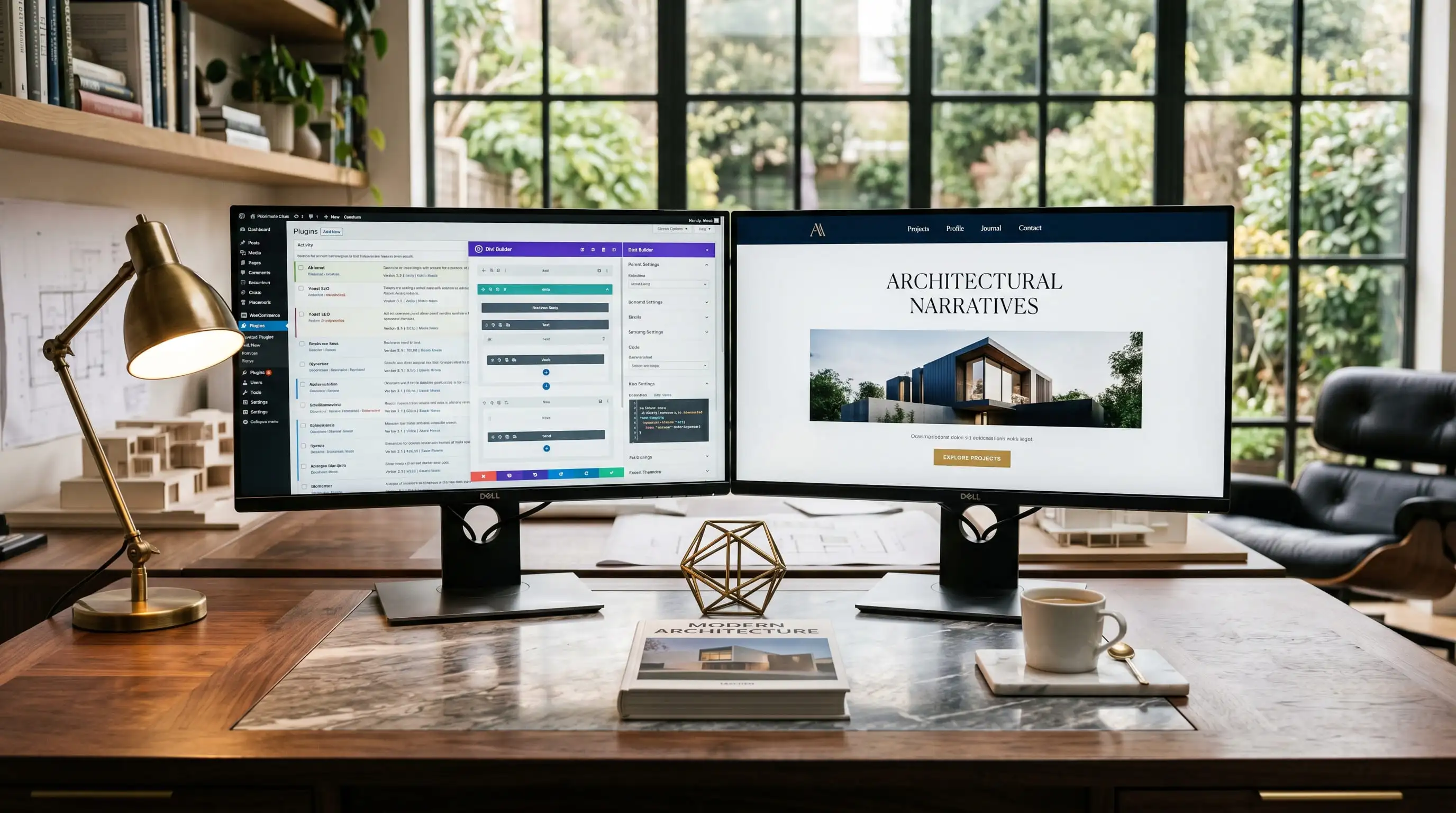
WordPress vs. Custom-Built Website: Which Is Actually Right for Your Business?
WordPress vs. custom website: an honest comparison of real advantages, real disadvantages, and which option actually suits your business goals.
Read all articles
More posts on web design, SEO and digital marketing for real estate professionals.